Automotive 26/10/2025 Nichita Roilean, Founder 4 min read
How to Repair and Improve Your Car Parts Cheaply with 3D Printing
3D printing cuts the cost of a replacement plastic car part by 70–90% versus OEM pricing. We standardly print in tough PETG; for extreme heat we handle specialty materials case-by-case.
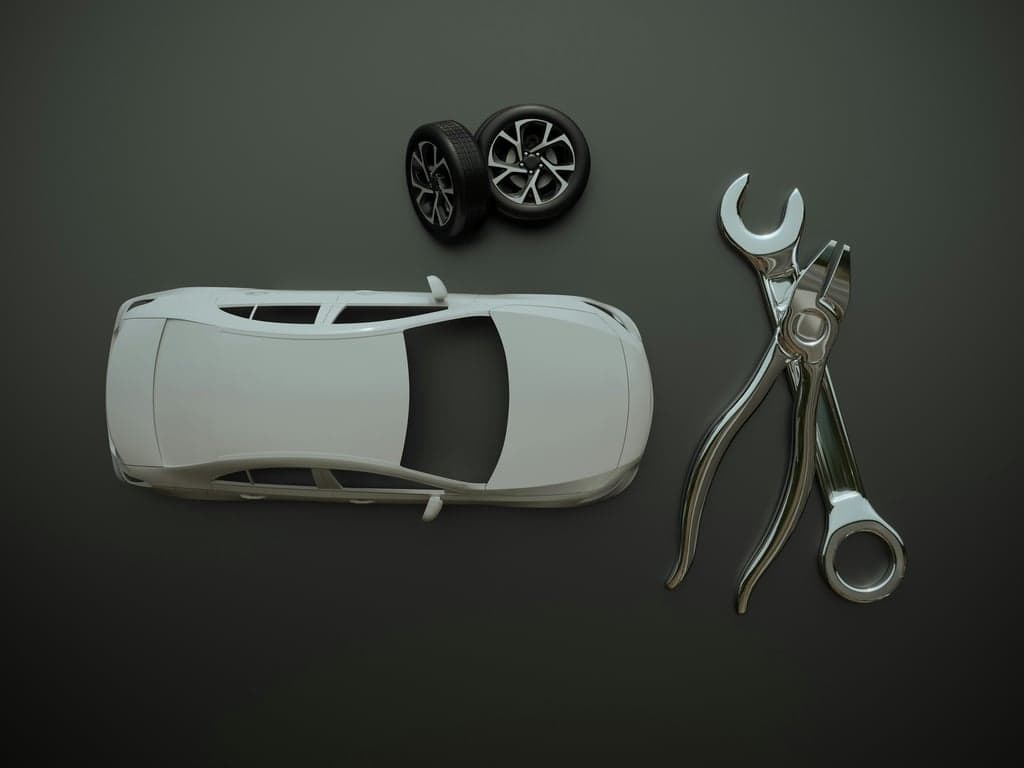
3D printing reduces the cost of a replacement plastic car part by 70–90% compared to OEM pricing. Material choice is critical: a car interior can reach 80–120 °C in summer sun, which means PLA (softens at 60 °C) is unsuitable. For most mechanical parts we standardly print in tough PETG (around 70 °C heat resistance). For parts exposed to extreme heat or direct, long-term sun we handle the order case-by-case with specialty materials.
Every motorist knows it. A small plastic lever for ventilation control breaks. A clip on the sun visor snaps off. A cover in the interior disappears to who knows where. When you then find out that the manufacturer sells this part only as part of an entire expensive panel for several thousand crowns, or that it's not available at all for your older model, it's infuriating. Fortunately, there's a solution that's fast, efficient, and surprisingly cheap – 3D printing.
A Lifesaver for Your Wallet: Repairs and Spare Parts
The greatest strength of 3D printing in the automotive world lies in the production of spare parts that are either overpriced or unavailable.
- Interior Plastics: Knobs, covers, clips, ventilation grilles, radio bezels – these are all parts that wear out or get damaged over time and with use. We can model and print them for a fraction of the original price.
- Parts for Vintage Cars: Are you the proud owner of a historic vehicle? Then you know how difficult it is to find specific plastic parts. 3D printing is often the only way to restore a vintage car to its original condition.
- Repairs Instead of Replacements: Instead of replacing an entire headlight due to a broken bracket, we can print just the small piece of plastic that's needed. The savings in such cases are enormous.
Tuning and Customization: Create Your Car Your Way
Beyond repairs, 3D printing opens the door to endless possibilities for personalization and tuning. You can create accessories that are not only functional but also stylish.
- Custom Holders: Do you need a specific mobile phone holder that fits perfectly in your car? Or a holder for additional gauges or drinks? No problem.
- Design Elements: Print your own gear shift knob, bezels around gauges, or unique ventilation outlets that will liven up the interior.
- Prototyping for Tuning: Planning major modifications? With 3D printing, you can cheaply print and test the shape of a new spoiler, air intake, or body kit part before investing in expensive final production.
Which Material Should You Use for 3D Printed Automotive Parts?
When printing car parts, choosing the right material is crucial. A car interior can reach 80–120 °C in summer sun, which is why standard PLA (softens around 60 °C) is not suitable for parts exposed to direct sun.
For automotive applications we standardly print in PETG:
| Material | Temperature Resistance | Best Use Case |
|---|---|---|
| PETG | up to +70 °C | Mechanically stressed interior parts, mounts, covers, parts not in prolonged direct sun |
| PLA | up to +60 °C | Not suitable for automotive use (garage-only visual parts) |
- PETG is our standard for automotive applications. It is tough, dimensionally stable, resists moisture and many chemicals (oils, fuels, cleaning agents) and handles normal mechanical loads.
- For parts in continuous direct sun, under-hood heat, or extreme UV exposure we do not standardly print — these orders are handled case-by-case with specialty materials. Tell us what you need and we will agree on a concrete solution.
(You can learn more about materials in our article Choosing the Right Material for Your 3D Print).
How to Get Your Part?
The path to your new part is simple. Even if you don't have a 3D model, a damaged component (even incomplete) or accurate dimensions and photos are often enough. We will take care of:
- Creating a 3D model (reverse engineering).
- Selecting the most suitable material for the given application.
- The 3D printing itself on our professional printers.
Don't be limited by manufacturers' offerings and pricing policies. Whether you need to repair an old Škoda or upgrade the latest model, contact us and discover the freedom that 3D printing brings to motorists!