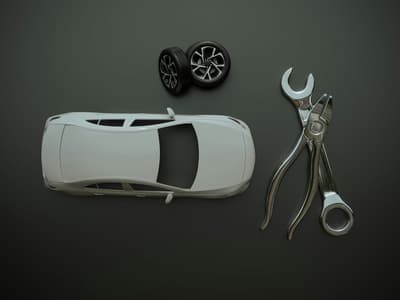
Minimum Wall Thickness for 3D Printing (FDM): 0.8 to 3 mm
For most desktop FDM printers the practical minimum wall thickness is about 0.8 mm (two perimeters on a 0.4 mm nozzle), while load-bearing parts need 2–3 mm. Nozzle diameter, layer height, material, and print orientation all change what actually works.
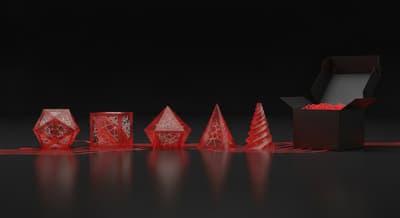
3D Print Order Online: What to Expect From Upload to Delivery
Placing a 3D print order online takes under two minutes when the service is built for it. Here is exactly what the process looks like, step by step, from file upload to a part in your hands.
3D Printing in Tallinn: Get Custom Parts Delivered Across the EU
In Tallinn and need a custom 3D-printed part? You don't need a local print shop — just a reliable EU service that shows the price right after upload and ships fast. Parts from €2, delivered to Estonia within days.

How to Order 3D Printing Online: File Upload Step by Step
Upload your file, see the real price right after upload, and order a custom 3D print without an account or email. Parts from €2, shipping across Europe, 48h dispatch — no quote waiting, no minimum order.
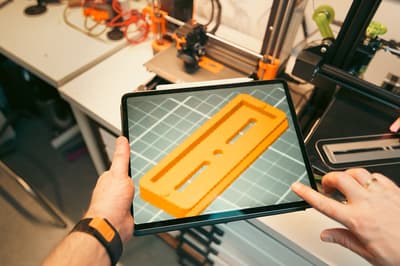
STL vs 3MF: Differences, Color Support and Which to Use
3MF is the better choice for most modern 3D printing workflows — it preserves color, materials, and metadata in a smaller file — while STL still wins on universal compatibility for simple single-material prints.

On-Demand 3D Printing in Europe: Price Right After Upload
Upload your file, get the final price right after upload, and have your part on its way within 48 hours — from €2.10 per part, no email thread required. How on-demand 3D printing in Europe works in 2026.
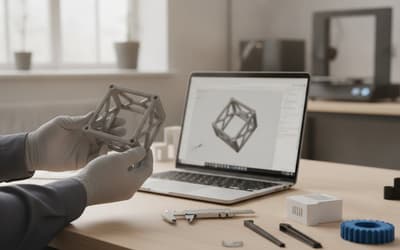
Need Something Made? Custom Parts Without a Factory
Need one bracket, five fixtures, or a single replacement part? On-demand 3D printing gives B2B teams the price right after upload and 48-hour delivery — no quotes, no minimums, no factory.
3D Printing File Formats: STL vs 3MF vs OBJ vs STEP
There are four main 3D printing file formats: STL (most common, but no colors), 3MF (modern standard with color and material support), OBJ (with textures), and STEP (precise CAD geometry). This guide explains when to use each format.
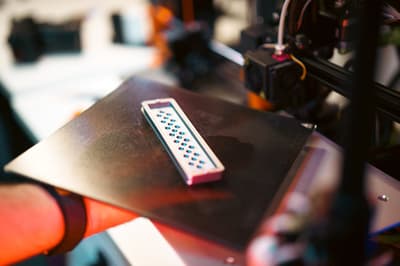
3D Printing Tolerances & Accuracy: Technical Guide 2026
3D printing accuracy depends on the technology: FDM achieves ±0.2–0.5 mm, SLA ±0.05–0.1 mm, and SLS ±0.3 mm. This guide explains what dimensional tolerances are, how to design for them, and which technology is best for your application.

How AI Is Changing 3D Printing: Design, Slicing, Manufacturing
Artificial intelligence is changing 3D printing in four key areas: generative design (AI designs lightweight structures), automatic slicing, quality control via computer vision, and price calculation from 3D files right after upload. In 2026, these capabilities are available even to small print services.

Craftcloud Alternative? Niro3D vs Craftcloud Compared
Niro3D wins: calculates prices from real G-code, prints directly, and delivers in 1–3 days. Craftcloud aggregates 150+ printers with no quality control; hidden costs add 30–50% to the displayed price.
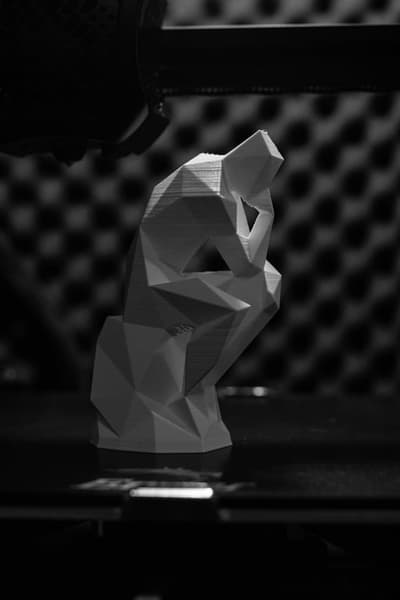
Order Multicolor 3D Printing: How Much It Costs and How to Save
Order multicolor 3D printing on demand — up to 4 colors in one print, no gluing. Each swap adds 2–5 g of waste, but smart color layout at Niro3D cuts cost by 100–150 CZK.
Ready to start printing?
Upload your model or choose from ready-made prints. See the price right after upload.